
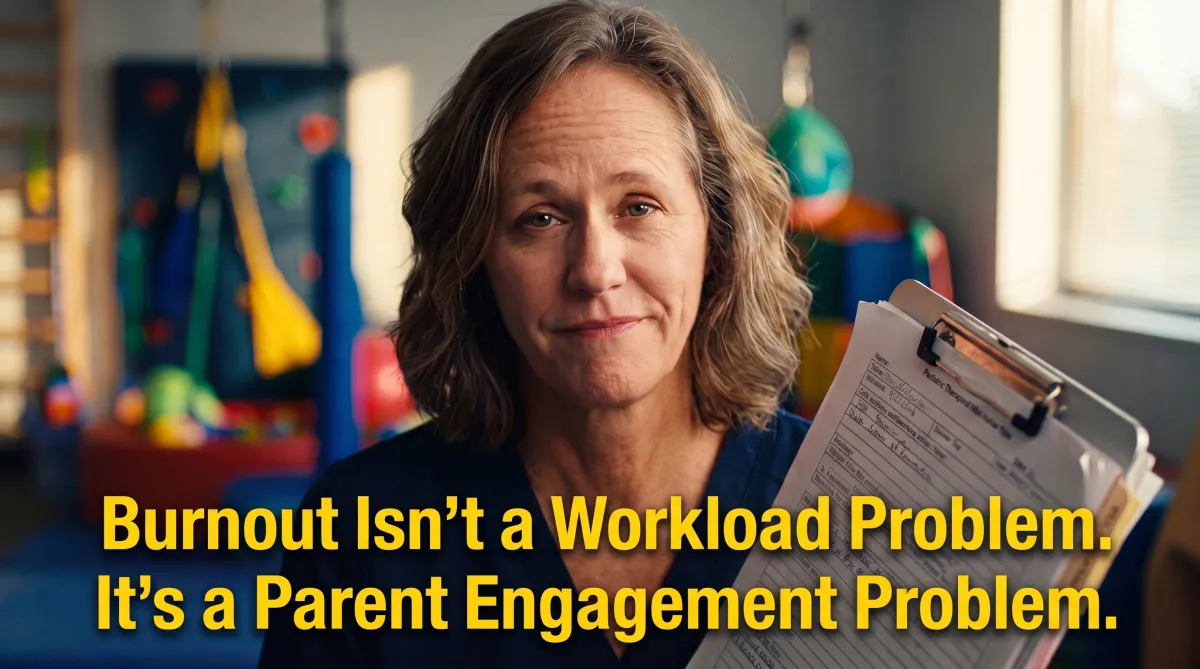
Burnout Isn't a Workload Problem. It's a Parent Engagement Problem.
Ask a burned-out pediatric therapist what's wrong and they'll usually tell you they're tired.
Ask a few more questions and something else comes out.
They planned a great session. The parent sat in the waiting room. The child had a hard day. The transition out was a meltdown. The therapist spent the last three minutes trying to explain a home program while the child was on the floor and the parent was visibly done. Then they cleaned up the room, pulled up their documentation, and started all over again.
They're not tired from working hard. They're tired from working alone.
The Weight Nobody Talks About
There's a specific kind of exhaustion that comes from carrying a treatment plan by yourself.
You create a thoughtful home program. You explain it clearly. The family comes back the next week and nothing was practiced. You adjust your approach. You try again. Progress stalls. And at some point, the questions start.
Am I doing this right? Is this child stuck because of something I'm missing? Maybe I'm not the right fit for this family.
Those questions were never yours to carry. But when the parent isn't a real partner in the work, the therapist absorbs everything. Every missed session, every failed home program, every child who isn't progressing becomes something the therapist holds alone.
That's not burnout from a busy schedule. That's burnout from isolation inside a job that was never meant to be done solo.
The Moment It Becomes Unsustainable
Think about a full day of sessions.
First family: Child arrived dysregulated. Parent stepped out to take a call.
Second family: The home program wasn't touched.
Third family: They've cancelled twice this month, and the therapist isn't sure they'll keep coming.
Fourth family: The parent seems frustrated, asked pointed questions, and the therapist left feeling like they'd done something wrong.
That's not a hard day. That's a Tuesday.
And when Tuesday looks like that every week, the joy that brought someone into this field quietly disappears.
This Isn't About Blaming Parents
I want to be careful here because this is where the conversation often goes wrong.
Parents who don't follow through aren't bad parents. They're overwhelmed people who often don't understand what's expected of them, haven't been shown how to carry the strategy into their actual life, and are managing more than most therapists know. They weren't trained for this any more than therapists were trained to coach them.
When a home program doesn't get done, it's worth asking:
Did the parent have a real chance to practice it before they left?
Did they understand why it mattered?
Did they have time to ask questions?
If the answer is no, the breakdown isn't a parent problem. It's a handoff problem.
You Deserve A Real Partner In This Work
Pediatric therapy is not something one person can sustain long-term without support. Not clinical support, not emotional support, but a genuine partner in the treatment room who shares the goal and knows how to help work toward it.
That partner is the parent.
But parents don't become partners automatically. They become partners when therapists are given the tools to bring them in, and when clinics build the structure that makes that possible.
If you're burning out, I'd ask you to look not just at your caseload but at how many families you feel truly partnered with.
The answer might tell you more than the number of sessions on your schedule.
Want To Go Deeper?
If burnout is something you're navigating right now, Meet Me Halfway was written with therapists like you in mind. It's not about doing more. It's about doing this work differently, with better tools and real partnership.
Listen to the Connect the Dots Learning Center Podcast for more honest conversations about what this job actually costs us, and what helps.
Follow Connect The Dots Learning Center:

🎙️PODCAST: ctd-learn.com/ctdlcpodcast
▶️ YOUTUBE: www.youtube.com/@StephanieWagers
🅾 INSTAGRAM: https://www.instagram.com/ctdlearningcenter/
ⓕ FACEBOOK: https://www.facebook.com/connectthedotslearningcenter